

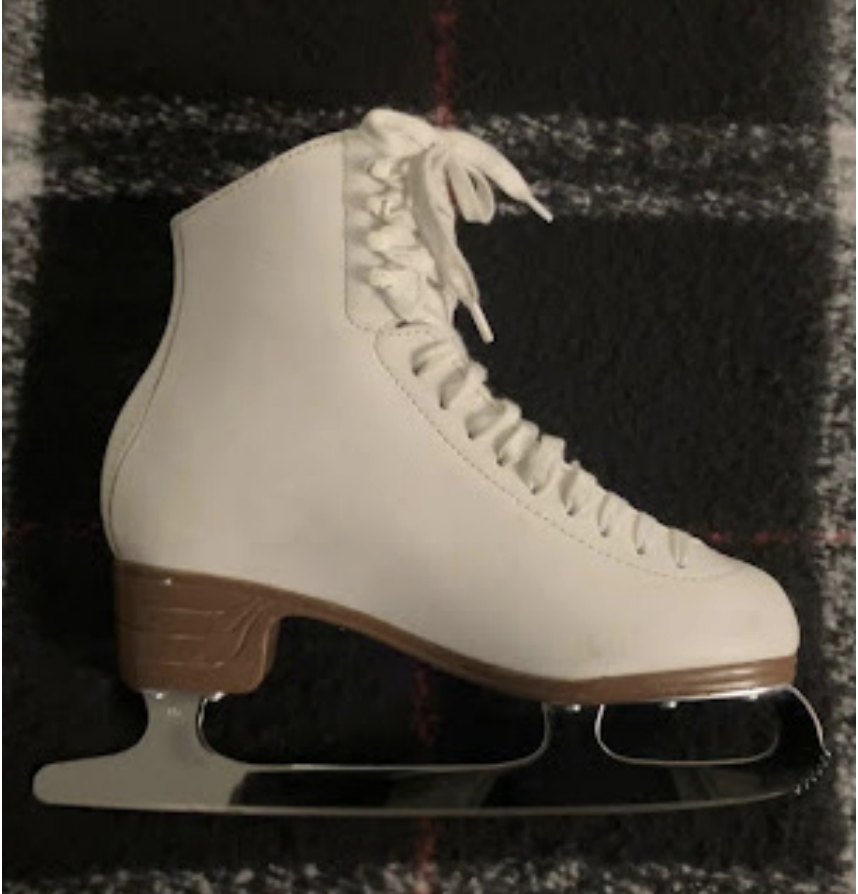
The backflip in figure skating has always been a contentious issue at the Olympic level. The move, as originally executed by Terry Kubicka in the 1976 winter Olympics, landed on two feet.
This did not conform to the standard of jumps landing on one foot, and the flip was subsequently banned for that and for being too dangerous.
It remained as such until 2024, the same year French skater Adam Siao Him Fa executed it illegally in his gold-winning performance, deducting him two points that left his 20-point lead untouched.
Those who watched the 2026 Olympics got to see the backflip performed legally for the first time by American skater Ilia Malinin in multiple routines, each time met with raucous applause.
But in the time between the pioneering backflip of Terry Kubicka and the cheeky back-flip of Siao Him Fa’s already guaranteed win, there was Surya Bonaly.
Bonaly was 25 when she competed in the 1998 Olympics as the representative for France. Bonaly had been judged very critically — arguably unfairly — in her previous Olympic skates.
In the 1993 Olympics, she was awarded second place behind Oksana Baiul, who had five jumps and no combos, defined as multiple jumps in quick succession.
Bonaly had seven jumps and one combo. In 1994, she was once again denied first by a narrow vote that declared Yuka Sato the winner—again, with more jumps and combos (11 and 3 to Sato’s 9 and 1).
Bonaly had beaten Sato 8-1 in the technical mark, but Sato had her beaten 8-1 in the presentation mark. In a tie-breaking vote of 5-4, Sato became the champion.
The presentation mark, the most subjective scoring section, has always been her weakest area. While she had room to grow, there is little doubt that her race was a contributing factor to the consistent low scoring.
“There’s a lot of coded language that commentators use when they’re discussing black female athletes,” said Stacia Brown, a writer for The New Republic, “and they were definitely doing that to Surya.”
She was often described explicitly as being graceless and undignified, along with other backhanded
comments, such as her being “mysterious,” “unusual,” or even “exotic.”
The standards of figure skating at the time, especially for the female skaters, was very much like that of ballet. It was the ideal of the ice princess: slim, tall, graceful, dignified and — consciously or not — white.
As a black woman, Bonaly was unable to conform to an ideal that didn’t include her, no matter how hard she worked or how well she did.
This is what Bonaly was thinking of when she entered the rink in 1998. She knew she wasn’t going to be able to place, let alone secure gold. Bonaly had ruptured her achilles tendon earlier in the season and pulled a muscle in her leg days before.
Adrenaline wouldn’t be able to push her through landing her jumps. Even without her in- juries, she knew the judges would never let her be a gold medalist.
And so, she decided she would leave the audience with something they would never forget. After all, it was her last Olympic competition. Bonaly, despite knowing it was an illegal move, executed a backflip, landing it on only one foot.
The audience went wild, on their feet to give her a standing ovation before her routine even finished. Bonaly is the first woman to do a backflip at the Olympics, the first person to land it on one foot and the first to ever do the move illegally.
Bonaly took her bow to the audience before the judges. Even though she placed 10th in that competition, her skate is the one people remembered.
In her professional career after the Olympics, she did more than 500 backflips over her ten years with Champions on Ice. Bonaly couldn’t fit the ice princess mold, and so she carved space for herself in the annals of figure skating history her way.
