

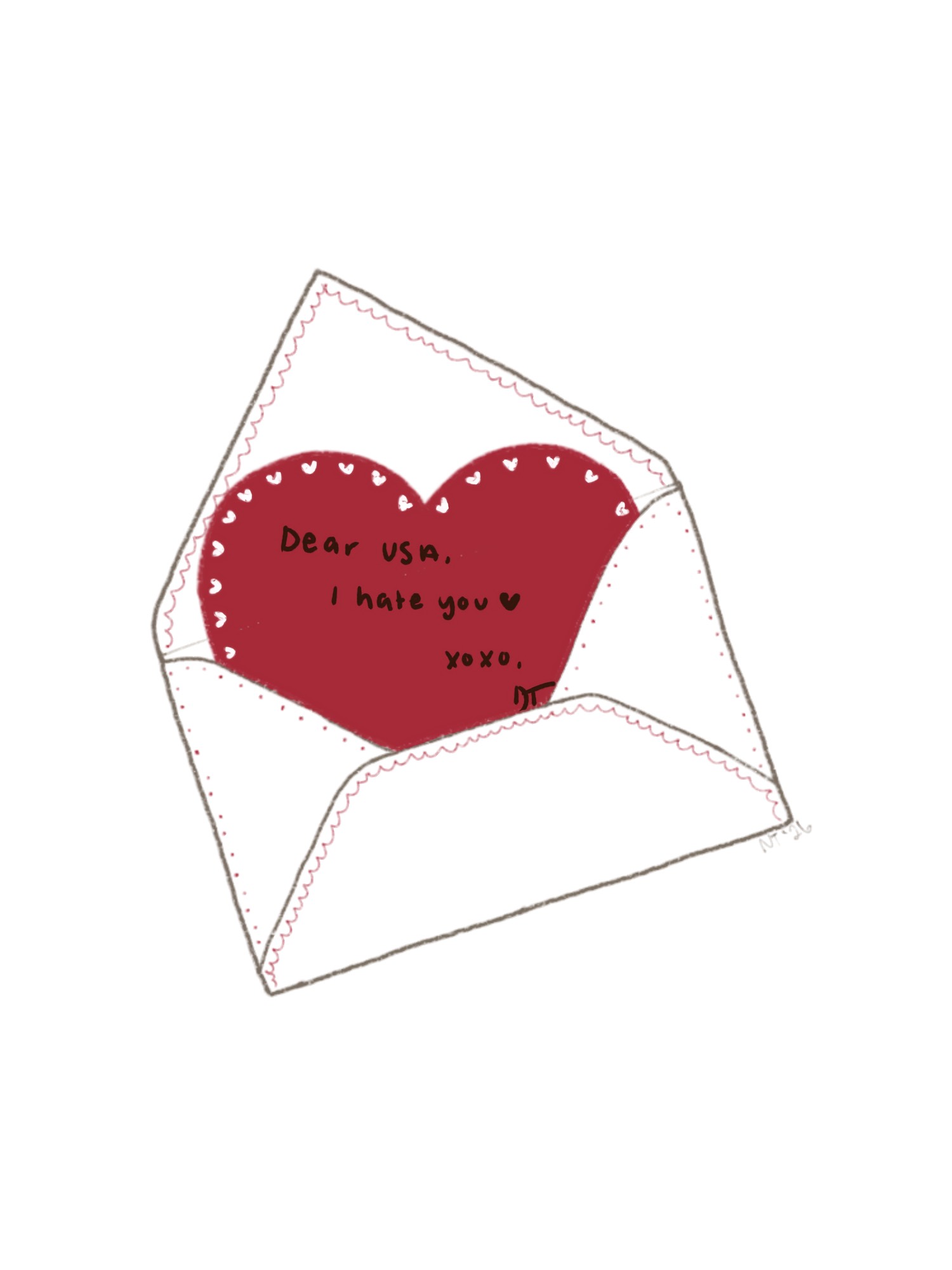
Americans have always been proud of their “inalienable” rights granted to them by the Constitution.
Most learn about the amendments that give them these rights, or are even required to memorize them,
in middle school.
First articulated in the 17th century, these ideals are deeply ingrained in American society. The United States is known as the “land of the free” for this very reason: its commitment to natural rights and freedoms.
But these rights outlined in the Constitution have been challenged since the early years of government after the American Revolution.
Though none have been as covertly suppressed as the First Amendment, specifically the freedoms of speech and press that it entails.
It is becoming increasingly apparent that the American ideal of free speech is a performance or a facade, not a clear reality.
There are unwritten restrictions on speech and press that have been revealed in courts and on
the streets for decades.
James Madison, who drafted the First Amendment may have had true and just intentions, but now his words are only a placebo to prevent protest.
The waning power of free press in the present suddenly became apparent when Don Lemon, former host on CNN, and freelance journalist Georgia Fort were arrested recently along with two other journalists for covering an anti-ICE protest during a church service in St. Paul, Minnesota.
The journalists argue they were exercising their rights to freedom of speech and press and were not in-
volved in the protest.
They were arrested on the grounds of obstructing the freedom of religion of those in the church. We
shouldn’t be surprised.
Americans have been put on trial or faced other consequences for speaking out against the U.S. government since its founding.
In 1798, the Sedition Act was enacted to curb First Amendment rights for those speaking out against the government. The act made printing and publishing newspapers or pamphlets critical of President John Adams and the U.S. government illegal.
Though the Sedition Act expired in 1800, it would not be the last time Americans would be tried for exercising their right to a free press.
The 1950s, notorious for Senator McCarthy’s anti-Communist hearings, steamrolled the rights of free speech and press for many who wrote or spoke against McCarthy.
Journalists and writers who were blacklist-ed could not find work, thus preventing them from publicly speaking out against the U.S. government and the civil liberties that were being taken away.
Now, people are still facing repercussions for writing and speaking about how they see the world, rights so many Americans assume are safely protected by American institutions.
In the aftermath of right-wing activist Charlie Kirk’s death, 600 people in various occupations were fired or faced other repercussions for posting comments about his death on social media.
Most only criticized his politics, and some people were even fired for quoting Kirk’s own statements from
his political career.
Doctoral student Rümeysa Öztürk wrote an opinion piece for Tufts University Daily, together with other graduate students, emphasizing the inherent dignity of all people, which included urging the university to recognize the genocide in Palestine.
She is an international student with a visa, but this opinion article led to her arrest by ICE agents. Injustices like these cannot be allowed to continue.
Öztürk is not the only person to recently speak out against inhumane treatment of people and be punished for what should be seen as her inherent right to freedom of the press.
Everyone in America,citizen or not, must have the ability to voice their opinions in order for the
government to function as a benefit to society, rather than an overseer, waiting to punish those who step out of line.
Freedom of speech and press, protected by the U.S. Constitution, is losing the power it once held.But it is important to acknowledge that these rights are not set in stone like most Americans believe.
The freedom to speak against the government is not a given, and it is time for Americans to realize this before the First Amendment is treated with even less regard than it already is now.
