

For many, the Center for the Humanities popped into existence over the summer. This is far from the truth. Center Director and English professor Joanne Diaz clarified the center’s timeline and its value now that it’s here.
Diaz made it clear that the idea for a Center for the Humanities has lingered for quite a while—15 years to be exact, since Professor Carolyn Nadeau conceived of the idea. Formal commitment to the center came in Fall ‘24/Spring ‘25.
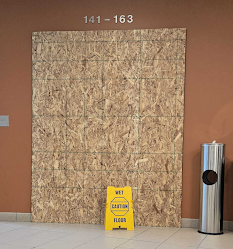
There’s a high energy about the humanities thanks to President Zenger and others in the school’s administration. When the first floor of the Center for Liberal Arts unfortunately flooded over the summer, this excitement saw an opportunity instead of pure disaster.
By Fall 2026, the Center for the Humanities will have a physical presence where mere cubicles and offices used to be—the first floor of the Center for Liberal Arts. This space will function to highlight student work in the humanities, as well as be a location to host humanities programming.
Diaz sees a universal value in the humanities. “I have friends and family members in all spheres,” Diaz said. “Regardless of the professional field in which they engage, they’re all saying that they want to hire people who are flexible and resilient, people who are adaptable, critical thinkers and researchers, and people who can express themselves well,” she said.
Diaz emphasized that the humanities teach students to juggle both logical and theoretical knowledge in the workforce. The mental flexibility that students learn through humanities education is exactly what employers are looking for.
But those interested in careers outside of the humanities should still have an interest in them. “If you’re a Business major, come see me! Come learn how you can pair your Business major with English, Philosophy, History, Languages, Literatures and Cultures.”
Diaz said if students are able to pair their non-humanities related majors with something in the department, they will have a leg up in the job market. You would be able to ask ethical questions about business practices, write up an excellent article about a corporation or brand and understand the historical context of the industry you end up in.
Speaking of Biology majors, Diaz said that her hope for those students is that they remember they don’t have to major in Biology to go to medical school. In fact, they can major in anything as long as they take the pre-med prerequisites and excel on the MCAT.
“So if that’s true, come over here! Major in History, major in Philosophy,” Diaz said.
“Then when you go to medical school, you’re that person who’s not just looking at a person’s symptoms or diseases, but you’re looking at the whole person, and you’re able to think about the complexity of illness and recovery as it relates to the human experience!” she said.
Diaz has long-term hopes for the Center and the humanities themselves. “I want students to be able to come to Illinois Wesleyan, get financial assistance to major and minor in humanities disciplines, study abroad and take internships. I want us to just shower students with financial support for this type of work,” Diaz said.
